
Case · Housing Association
In 2003, engineers said: "The roof is 80 years old — it needs to be replaced." The board chose to wait. 22 years later, the roof is still in operation — and the association has ~7 million DKK in the bank instead of a mortgage loan.
Headline numbers
7M DKK
Liquidity retained — kept in the association's funds instead of a mortgage loan.
24M DKK
Future saving
Over the next 15 years (vs. a new roof)
−95%
Acute damages (K3) reduced
2,205 → 114 items
D → C
Energy rating improved
Without roof replacement
−86%
Deferred capital (M7)
32M → 4.5M DKK
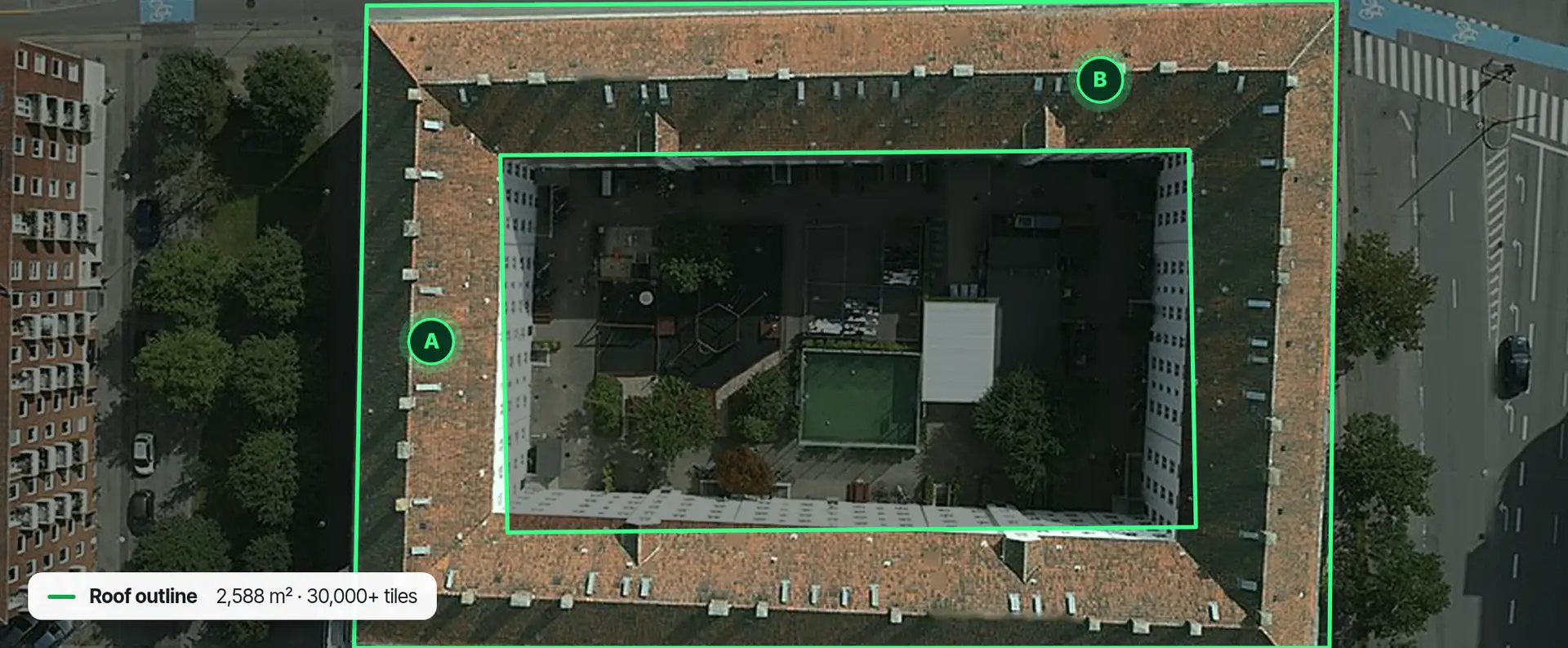
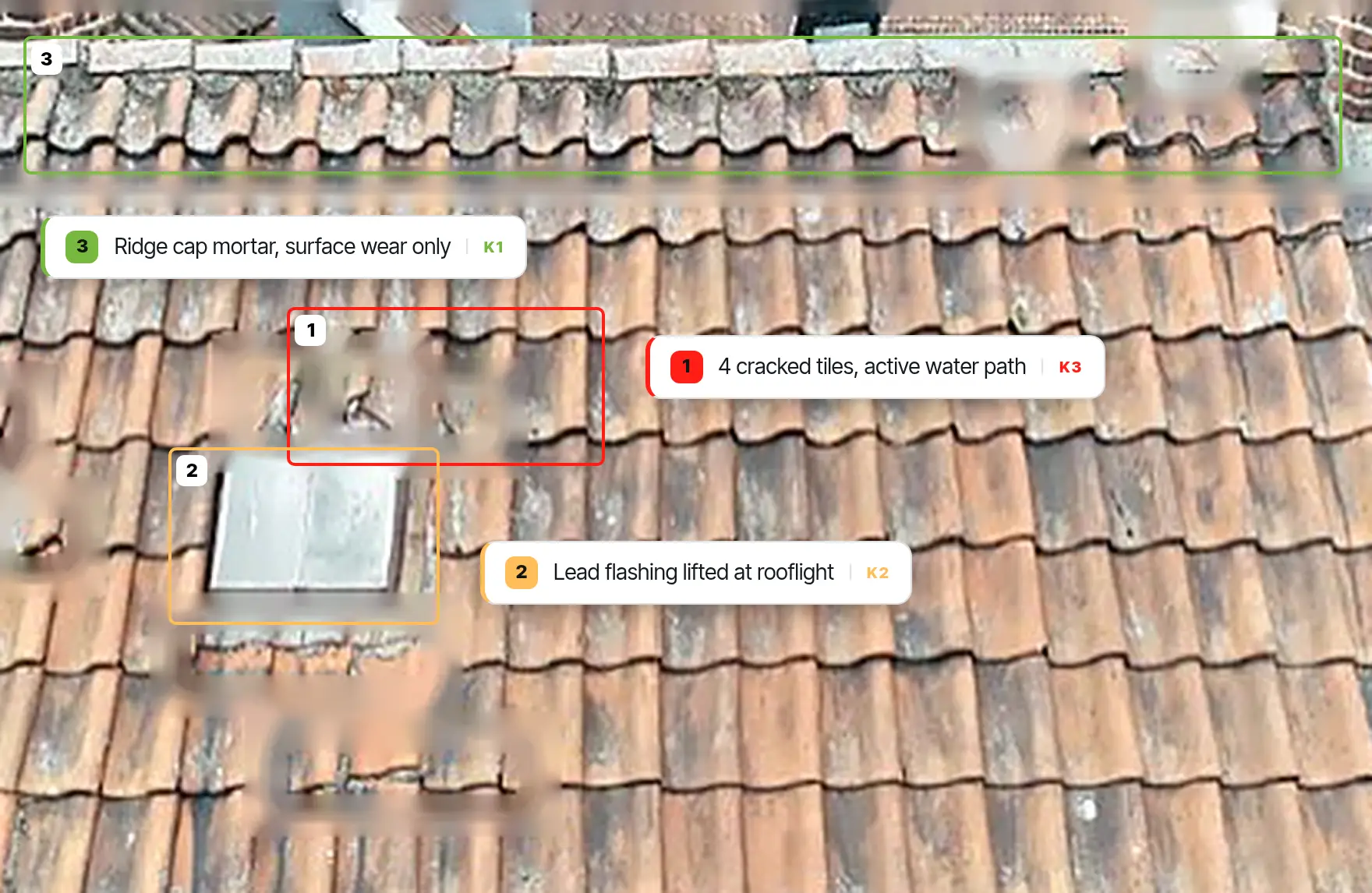
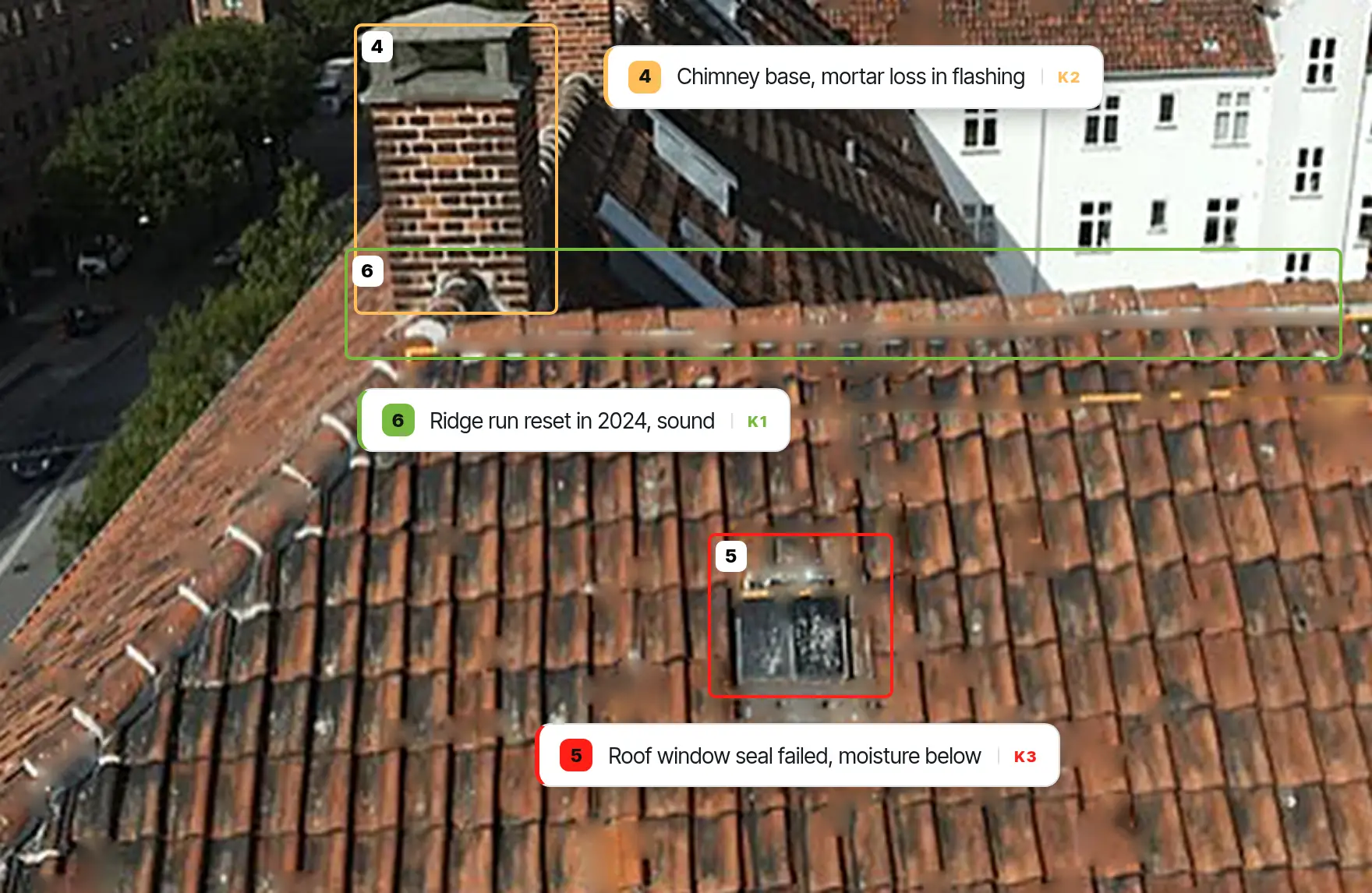
12 connected courtyards, 117 apartments, 5 floors + attic. Original tiles from 1923 — over 30,000 individual roof tiles, which the drone reports cover every time.
The simple story
The board members are shareholders — not construction engineers. Since 2017, they have made exactly one strategic decision each year: "continue minimum maintenance" — based on engine-calculated data from over 30,000 individually documented roof tiles.
Engine doesn't change what the board chooses. It changes the data quality of the foundation — the difference between choosing in the dark and choosing with 30,000-tile documentation in hand.
"The roof is 80 years old. It must be replaced."
— consulting engineers, 2003
Roof reaches 80-year expected lifespan. Board chooses to postpone — but without ongoing data.
DroneTjek flies over the 12 courtyards for the first time. The engine finds 2,205 acute damages — 3× the 2020 level.
Second systematic report. Acute damages down to 735 (−67%).
Critical damage down to 114 (−95%). Roof continues operating.
103-year-old clay tile roof still in operation. ~7M DKK in the bank.
Engine-calculated deferred capital (M7)
M7 indicates the potential reactive exposure — the deferred capital that would escalate into cascade damage if no maintenance were performed. It is not a bill to be paid all at once.
2017 — baseline
31.98M DKK
start (~2,205 acute damages)
Higher than the price of a completely new roof (27.9M). That is how critical the situation was.
2020 — after 3 years
10.66M DKK
−67% since 2017
735 critical damages. Minimum maintenance beginning to take effect.
2024 — after 7 years
4.51M DKK
−86% since 2017
114 acute damages. Early detection keeps damage at K1/K2 level.
The key pattern: critical damage (K3) decreases because engine detects it 1–3 years before it escalates from K1 → K3. Early detection = lower cascade factor = less capital expenditure.
Kjøgegaarden is the perfect example of what engine + drones do for a housing association. The board consists of shareholders — not engineers. Engine gives them four simple numbers each year plus a dual-price matrix, so they can negotiate contractor quotes against both AE and Molio. This has given them ~7M DKK in the bank instead of a mortgage loan, the energy rating has been raised D → C, critical damages have been reduced by 95%, and the roof is 103 years old and still in operation.
Want the same basis for your association?
A report gives the board the decision-making foundation that covers every single roof tile.
Request a MeetingWe use cookies to see how visitors use our website, so we can improve it. Statistics are only collected if you accept. You can change your choice at any time.